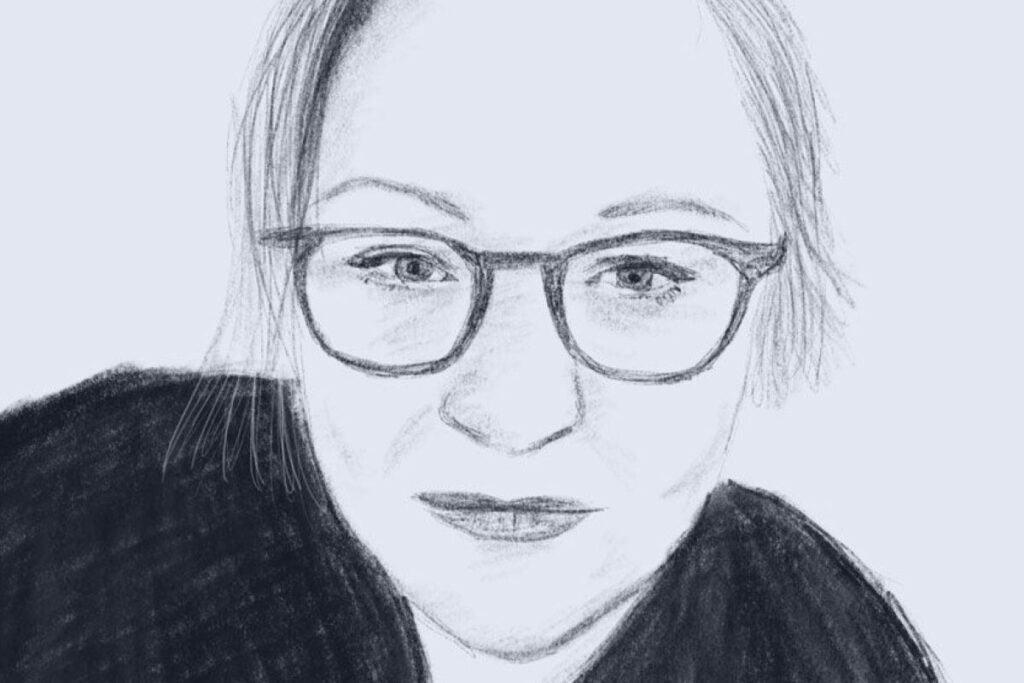
Dr Sian Stanley, clinical director of Stort Valley and Villages PCN, reports back on her reflections of this year's NHS ConfedExpo, which took place in Manchester last week
The NHS 10 year plan loomed large at ConfedExpo this year. It was the thing we all talked about without really talking about it—a half-revealed prophecy everyone wants to shape, or at least get a line into. The only thing more revered than the Plan was health secretary Wes Streeting himself.
I've been attending Confed for a few years now. It’s always polished, always impressive. Big screens, branded cushions, keynote voices that would calm a riot. But it’s also increasingly surreal.
On Friday morning, I was back in my consulting room, staring at a fraying carpet and swatting a fly that had no interest in transformation plans. The dissonance was real.
The cult of 'Left Shift'
We’ve gone from being blamed for the NHS crisis to being hailed as its salvation. Forgive me if I’m not throwing my stethoscope in the air just yet.
‘Left shift’ dominated the conference. It was invoked like scripture: the idea that more care should move from hospital into the community. I sat through multiple sessions dissecting its logic, most of which boiled down to: It didn’t work before, but this time it must.
Fine. I get the theory. But the how? That’s fuzzier.
Does the system want primary care to deliver left shift alongside business as usual? Should community providers pick it up? Or will acute trusts be handed contracts to do it, despite no clear track record or framework?
We’re told everyone has to work together—but the actual mechanisms remain a mystery. After decades of competitive procurement, are we really going to pivot to kumbaya collaboration overnight? How do non-statutory PCNs and federations collaborate meaningfully with vast Foundation Trusts that can roll out digital transformation teams and procurement departments?
Prevention and integration: Not new ideas
If I heard the phrase ‘the preventative agenda’ one more time, I might have screamed:
WHAT DO YOU THINK GPs HAVE BEEN DOING FOR THE LAST 20 YEARS?
We’ve been ‘integrating’ forever—because we’ve had no choice. It’s not that we’ve failed to engage with the system. It’s that the system has repeatedly failed to engage with us.
We’ve been marginalised, sidelined, told we’re opaque, overpaid, lazy, etc. And now? Suddenly we’re the saviours of the whole NHS. I’m not saying we’re not—but when we were shouting it from the rooftops, no one wanted to hear it.
Big voices, bigger gaps
Interim CEO of NHS England, Sir Jim Mackey, with the most soothing voice in healthcare, held the stage. I genuinely tried to follow. I leaned in. And I left not much the wiser. It was probably my fault for not understanding—I know he was trying to tell me something. I'm just not sure what it was.
Strategic adviser at the Department of Health and Social Care, John Oldham, delivered a stirring call to arms. For a moment I thought: This is it. Then the moment passed, and the weight of it all returned - he has some fantastic insights, I hope he is heard.
Health secretary, Wes Streeting was articulate, polished, strategic. But I might have missed the bit where he describes how general practice gets the autonomy or tools to lead this change. I just felt a strange, quiet sadness that our social care, schools, and prison system aren’t funded like the NHS is. And the NHS? It’s burning through the GDP of Portugal—so yes, every penny should be accounted for.
Just, maybe, stop pretending GPs are the reason we’re here.
We’re not the problem. We’re also not new. We’re the part of the system that’s been holding it together with Blu Tack, biscuits, and belief for far too long.
So when someone next says ‘left shift’ like it’s a spell that will fix everything, forgive me if I just smile politely and go back to my ever enlarging, increasingly complex duty doctor list.
Final reflection: Dirty martinis and dirty realities
Look—I loved dancing around my handbag at Dirty Martini. I genuinely enjoyed sharing a stage with some truly inspirational people. And yes, the razzmatazz of Confed is always impressive.
But now it needs to be repeated, with equal energy and respect, at the grassroots.
Primary care must be supported in a way that reflects the real work we’re doing every day: the QOF, LES, DES, the missed lunch breaks, the chaotic clinics. And someone needs to start enabling, properly enabling primary care — (yes, I said it and I hate myself) to create the space and conditions to deliver what everyone’s asking of us.
We need space to complete the Three Rs and an F:
- Relationships – built across the system, not just around boards.
- Responsibility – shared, not shifted.
- Risk – acknowledged and understood; we already carry more of it than anyone seems to notice.
- And Forms – my personal bête noire. Unless we reduce the sheer number of them, I simply refuse to play ball.
Integration will never be delivered by a keynote alone. It will be delivered by people with sticky desks and inboxes full of patient tasks —if only they’re given the time, the trust, and...fewer forms.
Dr Sian Stanley is clinical director of Stort Valley and Villages PCN, East of England CD Representative, NHS Confederation and a GP partner in Bishops Stortford, Hertfordshire. Read more of her articles