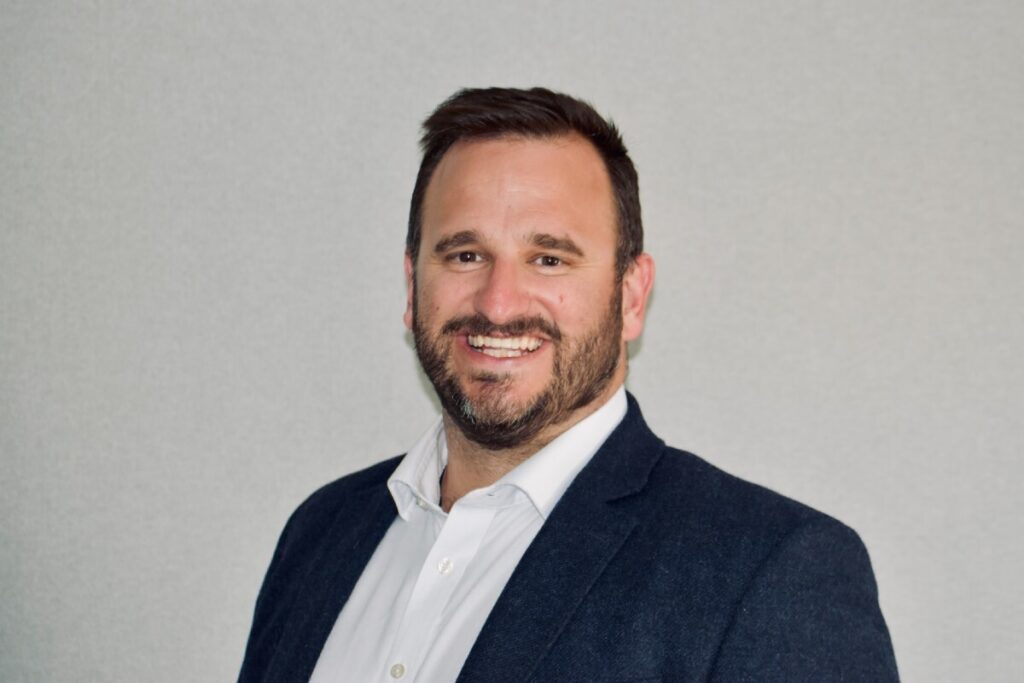
Dr Duncan Gooch, new head of the NHS Confederation Primary Care Network, talks to Pulse PCN editor Victoria Vaughan about neighbourhood teams, PCNs and what he’d like to see in the 10-year plan.
Victoria Vaughan (VV): What are your aims as the new head of the NHS Confederation Primary Care Network?
Duncan Gooch (DG): I'm really keen to support primary care leadership. Primary care is an exciting area and we've got an enormous opportunity to own and take control of our future.
I'd like to move us from a transactional approach where we often find ourselves counting and measuring individual things rather than thinking about the overall outcomes of the populations we serve.
VV: Do you think PCNs are in the right place to look at this unmet need at a population level?
DG: PCNs have a great connection with local communities. They're born out of local networks which were often well-established before the inception of PCNs, so they're well-placed to take a role in leading and shaping the future. And if you look at what they're doing around the country, they're doing a terrific job at tackling health inequalities, improving access, and delivering extra services.
VV: What do you think about the current discussion around neighbourhoods and PCNs? And what’s the future of PCNs in this space?
DG: I think the word ‘neighbourhood’ is becoming increasingly confusing because it's used in different ways. One way to see through that confusion is to think about what we're actually trying to do. For me, as a GP who's seeing patients all the time, I get lost very quickly in these high-level descriptions where we're trying to create names. The function is what's important.
If I want to bring together a team across multiple different organisations, I need to build an infrastructure that will support and deliver that – and that's the construct of a PCN.
VV: Have you seen a benefit for patients in your PCN by running things across the locality or a smaller-scale neighbourhood?
DG: We’ve focused on trying to reduce health inequalities.
When I look at the whole population of Erewash, I can allocate resources according to where the need is. I'm taking time to build relationships with local community groups and areas, which allows me to support with an intervention to improve the overall health outcome because of the overlaying of individual registered lists that sit within our PCN. You couldn't use that type of approach were it not for the practices coming together in that way.
The other thing we've been able to do is coordinate activity across practices, where we're looking to reduce variation. We’re optimising prescribing to improve the quality of care across the whole PCN by targeting those who benefit from it most, rather than it all being done at an individual practice level.
And we can talk with more authority on behalf of our population. It's easier for me to come together with other PCNs in Derby and Derbyshire and talk about the benefits of working at scale, the needs of our population and therefore advocate better on behalf of those people.
VV: The 10-year plan is about to come out. What do you want to see in there for PCNs?
DG: What I really want is to see something that legitimises the role of primary-care-at-scale providers. I use that [term] because PCNs themselves are this network, but they're often underpinned by GP federations or other entities. We need to understand and recognise the role of these primary-care-at-scale providers and the provider collaboratives.
It would be remiss not to talk about the importance of left shift within the 10-year plan. It's important that we increase the proportion of the NHS budget allocated to primary and community care settings, closer to where people live, not least because of the return on investment. And I don't mean that we lift what's happening in an acute sector and move it into the community. I mean really thinking about how we do it differently and trying to prevent and get ahead of some of the reactive care that we often see.
I'd be keen on a commitment to some longer-term contracting. Short-term contracts, which often roll year-to-year, make it difficult to plan effectively in the long term, get continuity, and deliver interventions that pay back from a prevention perspective over a longer period.
There are also fundamental enabling issues around data and IT interoperability that feel crucial to delivering.
And estates are not fit for purpose. You've got 20% of GP estates that predate the creation of the NHS itself. If we want to carry on delivering and modernising primary care services, then we need a long-term estates plan.
VV: The idea is that money will be delegated to the front lines from ICBs. Do you feel confident that will happen? And that there will be sufficient agency and devolution of funds to your PCN to deliver neighbourhood healthcare?
DG: It's absolutely what I want. When I look around me, I see amazing individuals doing a really great job. If I can empower them and give them more control of what they do, then they will go on to do a better job.
Some of that's about building leadership capability and creating a sense of accountability. Because if we’re going to have more control locally, we need to make sure that there’s an understanding of the populations being served and that they feel accountable to the people for the outcomes.
So, involving the people that we serve feels critical if we're going to push resources and control closer to the front.
VV: Do you think using ARRS to hire GPs is a good idea?
DG: There's a lot to be commended in that it's introduced additional funding and got more GPs in employment.
But as a GP trainer and, having spoken with my previous trainees and others, I'm nervous about allowing these additional roles to become pan-PCN. The supervision and support that’s critical in the newly qualified stage might be harder to access. Some of what sits behind every GP in terms of their support network might not be well-established because it’s new.
VV: What’s your opinion of the pay differences that have come about between practices and ARRS roles, and then within the ARRS roles themselves?
DG: This problem is massive and it's really divisive. My purpose as a PCN clinical director is to bring members of staff around the common needs of a group of patients. If, as I'm building that team, people are being offered differential terms and conditions, and pay, it immediately drives a wedge between them and prevents us from being able to integrate as effectively.
If we're to pursue integrated teams and [achieve] the integrated working that we want, having those differences is a real issue. The purpose [of integrated teams] is very clear. It’s about delivering for people who need us to take a more coordinated approach to their care. And we've ended up with a distraction that focuses on pay rises and terms and conditions.
It’s not confined to the primary care setting. It crosses into community services, mental health services and local government. It exists everywhere and, rather than facilitating and supporting integration, it drives a wedge.
VV: Do you have any idea of how it can be remedied?
DG: I'm not sure how much it's adequately understood, if I'm honest. Where we see decision-making in different sections and silos, differences are being created. And I'm not sure those making the decisions see those issues on the ground.
I have high-level aspirations for us all to offer similar terms and conditions and pay rates, but I know that's not realistic in the short term. The [longer-term] underfunding across the whole of primary care has led to some of these discrepancies. The fact that it's taken a long time to be created means that it will probably take quite a long time for us to come out of it.
But I can still hold the aspiration to achieve that. And if we do, integration becomes even easier.
VV: Is there anything you’d like to see in a future PCN contract to support the work you're doing, or any changes you wish were in there?
DG: The original inception of PCNs was fantastic - creating additional resources in certain areas and bringing together multiple professionals and sectors around the needs of the population. The aspiration of that was incredible and I still think it’s excellent.
But if we compare the contractual content of the DES to those aspirations, I’m not 100% sure that they're precisely aligned.
So, if there's a way within the DES to focus more on the outcomes, we can look at how we’re doing with the job that we set out to do, which is to improve the health of our population. That would be really exciting. In the early part of the PCN days, we started to see some hints of that, and then, for several reasons – Covid included – it became somewhat distracted.
One of my wish list aspirations is related to health inequalities. Most of the funding lands through the Carr Hill weighting formula, which we know does a pretty poor job of adjusting for deprivation, particularly in inner cities. We're trying to ensure we have services that meet the needs of our populations, and we need it to be appropriately resourced. We have not got that right with the existing funding formula.