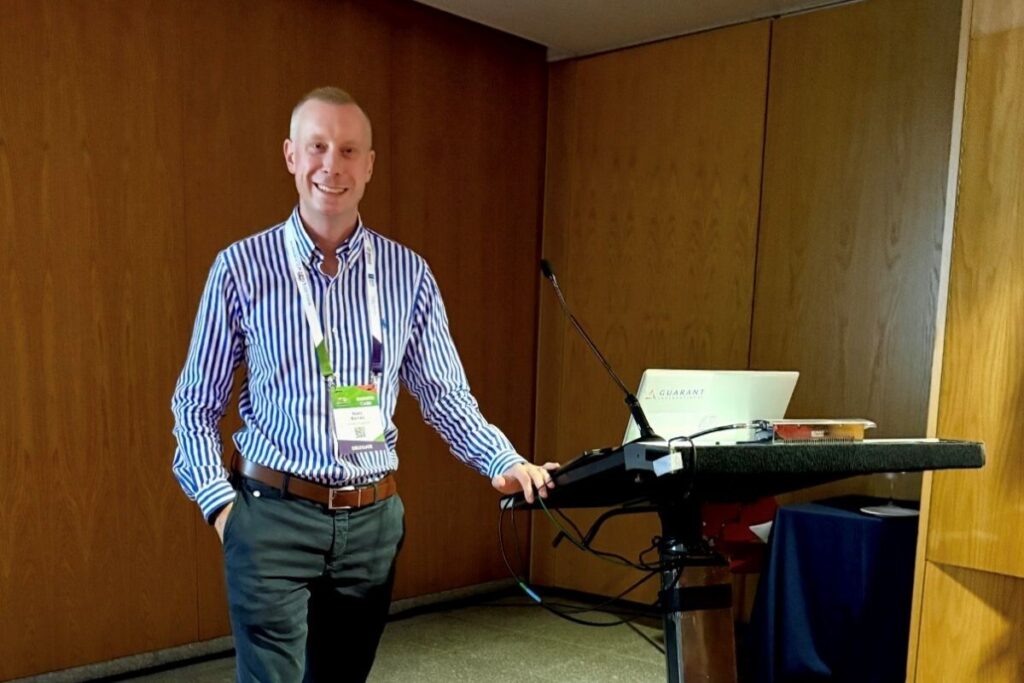
Dr Matt Baines, clinical director at Coventry North PCN, West Midlands, and new Pulse PCN board member, talks to deputy editor Beth Gault about how he’d like to approach ARRS roles in the future
Beth Gault (BG): What’s unique about your PCN?
Dr Matt Baines (MB): We have good cohesion between our practices which, from speaking to other PCNs, is not always a given. We communicate across the four practices in the PCN and we’re always able to talk freely with each other.
As with all PCNs, there’s disagreements and different points of view, which is understandable, but it’s healthy and we’ve been able to garner those views and get a consensus quickly for us to move forward.
My role as a CD is to bring strategic leadership to the PCN and look at the direction over the next financial year and beyond.
For example, we’ve spent quite a lot of time in the past 12 months looking at different ARRS roles, looking at addressing historic underspend and making sure we are safe and effective with those roles. Are the staff appropriately trained and supported, do they have annual appraisals. Things that seem quite boring, but are nonetheless very important.
BG: What difference has your PCN made to the patients in your patch over the past six years?
MB: Historically we were very GP led, whereas now we’ve got pharmacists leading on medicine queries and reconciliation which is great. We’ve got first contact physios who deal first with many musculoskeletal problems rather than GPs. We also have mental health workers, who are often the first point of contact for some patients. That’s been a great advantage.
In terms of the other components of the DES, enhanced access has allowed greater access and our patients have been responsive to that. And the development fund had allowed us to look at other models, like digital triage.
All our practices very much want to protect the partnership model, so we’ve tried using PCN funding and programmes to ensure we are supporting the individual members of our PCNs, which are the individual partnerships, to deliver good quality care.
BG: You’ve done some research on the area of ARRS as well, can you tell us how that came about.
MB: When I was a trainee GP I got involved in the Junior International Committee which is part of the RCGP and through that I gained some international experience and learnings from other countries systems and practices. I visited Japan and several countries in Europe and attended conference there.
At the heart of that is networking and getting to know doctors in different systems and countries. And I’ve kept a lot of those links.
And then last year at the World Organisation of National Colleges and Associations (WONCA) conference in Dublin, I presented an audit on the diversification of the GP team, comparing 2019 to 2023 and exploring how our appointment availability has changed. I presented some updated research on this topic at the WONCA conference in Lisbon earlier this year as well.
The presentation was mostly to stimulate discussion; to commentate on the changes we have experienced and how the appointment book has changed, let’s have a conversation about it because there’s been a massive shift over the past five years with the ARRS funding.
BG: There are a lot of strong opinions on ARRS, around PAs but also the additional GPs. What’s your view on those?
MB: The truth is, ARRS roles are here. I think with any changes in general practice, you can take an “I don’t want to change” approach, or actually you can embrace what’s here and move forward with what we have for the best interests of patients and the GP partnerships.
There’s going to be challenges, and we need to get our head around how we’re looking after these employees and how we’re helping them to practise safely and effectively. It’s a difficult balance and there’s no easy answer, but I think sometimes as GPs we can be overly pessimistic, and I’d rather observe what’s going on and then think about how we go from here. How do we move forward and use these roles and support them well.
BG: You also have a role in the integrated care partnership (ICP). What does that involve?
MB: It’s a role I took up three years ago, but isn’t overly onerous. The ICP sits alongside the ICB and looks at the strategy of the ICB. My role is as a GP voice within that large board. The board is wide and varied, including representation from the fire service, the city Council, housing agencies and Healthwatch.
Since the start of this financial year, and with the changes to the ICBs, we haven’t met since April and there’s uncertainty about my role going forward in light of the 10 year plan.
BG: And what was your reaction to the 10-year plan?
MB: I always look at new pieces of legislation with two lenses. The first is, what impact will this have on the partnership, the second is what effect will it have on the PCN – both in terms of patients and funding streams.
With both, there is no absolute certainty in the light of the 10-year plan. There are some positive sounds and there’s a significant project around integrated neighbourhood teams (INT) and what they will look like moving forward.
Currently, we’re in the pilot phase with our INT and there’s a large piece of work going on regarding that. Our ICP was successful in its application to be part of the NNHIP and local Clinical Directors are working closely with the ICB in the learnings and outworking of this.