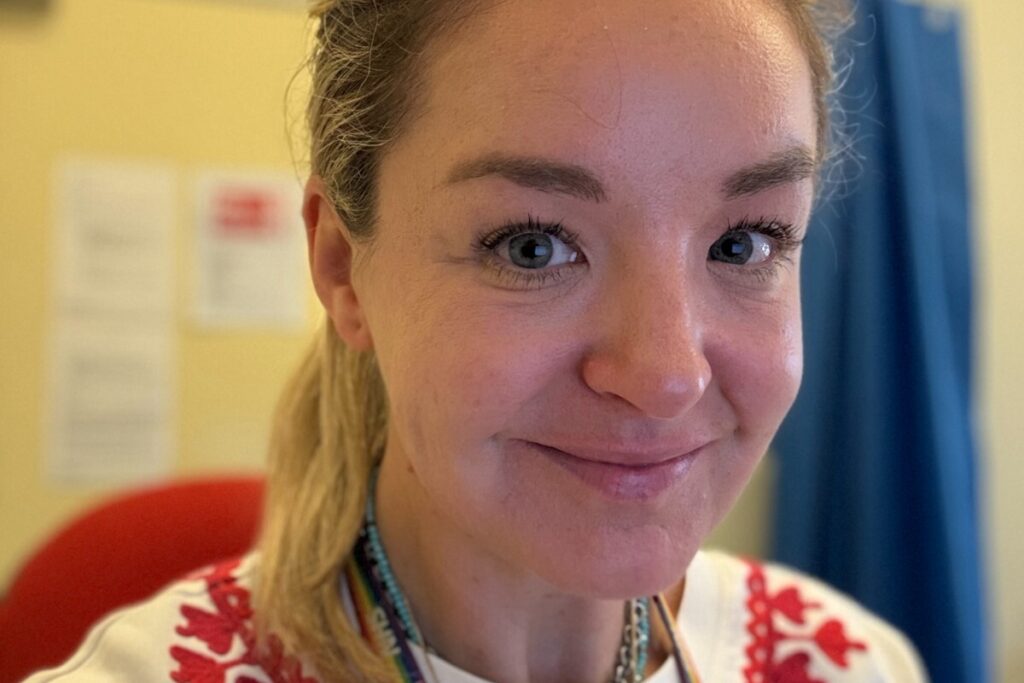
Dr Beth Lynch, clinical director at Brownlow Health PCN, Liverpool, and new Pulse PCN board member, talks to deputy editor Beth Gault about forming a new PCN and what the future holds for PCNs.
Beth Gault (BG): How did you come to be a clinical director?
Dr Beth Lynch (BL): Brownlow Health is a big practice that in April became a single practice PCN with 90,000 patients across six GP sites.
Up until April this year, we were part of a network called Central Liverpool PCN, which had 135,000 patients across ten sites. We took the decision to become our own PCN because we needed more autonomy over what services we delivered and how we delivered it to meet the diverse needs of our population.
During our five years with Central I’d always had interests and roles within the network. I became a partner pre-Covid and my main interests and passions have always been around health equity and complex lives.
My first role within Central PCN was as integrated care lead, which developed around the care home DES. That evolved and included different community-based projects, including those with learning disabilities and autism, complex lives, work with the homeless, refugees and asylum seekers. I then developed an interest looking at integrated system working which pushed me into place-based roles.
We’re a little unusual in that we have three clinical directors and a non-clinical director. When we became our own PCN, we wanted to make sure that all our priorities were covered within the leadership team. So, we have a clinical director on the team with skills in patient access models and digital transformation, another who is great around pharmacy and care homes, and I bring the integrated and community working experience. We all get two sessions a week for network related activity.
BG: What’s unique about your PCN? And what are the challenges and opportunities with that?
BL: We’re so new at the moment, but some of our uniqueness is being a practice that’s also its own PCN. It was a big decision to do that.
We also have quite a varied population across our six sites and all the needs of our patients are different.
We have a population of patients in the city centre who are very middle class, ‘worried well’, who don’t particularly need lots of pathology. Then we have a huge student population because we’ve got four to five universities that we look after, a big complex care cohort, including homeless, refugees, and a big LGBTQ+ population. We also have one site that has 50% non-English speaking patients.
Across all of our sites we have a huge amount of multimorbidity at a really young age. Key in this is the fact that all of our sites are within areas of high deprivation, and therefore the pathology tends to be multifactorial. Factors include poor education, high rates of smoking/alcohol/sedentary activity/poor diets, barriers to accessing healthcare via traditional routes (no digital access, working long hours, no childcare etc), poor perception of NHS services, fear, non-engagement with screening. This can lead to delayed diagnosis and poorer health outcomes.
So, we’re trying to tailor services to a population with really varied needs. When we were part of a bigger PCN, I think it felt difficult to do that.
We’re only four months in, but I think we’re benefiting now in terms of having that control of funding and our ARRS team so we can deploy people where they can make a difference.
BG: How was the process of splitting to your own PCN?
BL: Any uncoupling is always difficult, but we felt very strongly about our purpose and our mission doing it, and so we had to take the risk. But I think we did it very diplomatically and we still come together to work on projects. We want to continue this because we’ve got excellent relationships with our communities and there’s lots of things that we can support each other with.
BG: You mentioned you’ve been involved in complex lives and health inequalities, how do you think PCNs can have a role in these areas?
BL: I’ve always been somebody who likes championing the underdog and wants to make sure health is accessible for all. In all the work I’ve done, there’s part of me that has walked away sometimes thinking that even health inequality work creates inequalities.
The majority of patients in Liverpool live in huge pockets of deprivation and we’ve got lots of local enhanced services (LES) in place, including for homeless healthcare, and there’s a contract that sits with another service around asylum seeker health. Because of that we can develop these amazing services that support these patients well.
But I’m always conscious of those patients who don’t quite fit into those categories but are still very much isolated and siloed in their bubble of poverty who haven’t yet lost their house, but are at high risk of doing so.
I feel strongly that I want to fight for the patients that don’t fit into these categories, and I think that’s where PCN work comes in and where you can make a difference. Having the ability to integrate with our community services, to build those relationships and use data to analyse where those patients are. Working in PCNs is an opportunity to get our hands into where need is and develop overarching services that can support patients in different ways.
BG: What difference do you think PCNs have made in your area since pre-2019?
BL: We’re sometimes so stuck in the day to day, fulfilling our contractual responsibilities, that to be offered a chance to move away from that and work on a bigger scale, it’s an amazing opportunity.
In terms of practices, there’s a great sense of being in things together – everybody’s able to have communities of practice and peer support and know that we’re all in the same boat and look at wider scale at solutions to that, rather than in isolation.
But we’ve also been able to improve our target driven work as well – our DES, IIF, and QOF figures have all improved because we’re working in different ways and working in ways that are much more accessible and meaningful to the community. PCNs have enabled us to develop these relationships in the community that we haven’t been able to do before.
BG: What are your thoughts on the future of PCNs, especially given the 10 year plan?
BL: I’m an optimist and when I look back at where we were in 2019 and where we are now, and at what the 10 year plan entails, I see PCNs as being invaluable in delivering those services.
Over five years, we’ve got to know our communities really well, we know our leaders, where people go for a brew, we know where people get knowledge from, where they spread information. It feels like we’ve been doing a lot of the groundwork in terms of moving care into our communities, and especially with our ARRS roles, it feels like we’re really well placed to continue to deliver along those lines.
We’ve had a five-year head start in developing models that can work in the way the Government sees the 10 year plan working, and I think it would be a shame to use any vehicle other than PCNs.
BG: What do you make of the neighbourhood model?
BL: I’m such a dreamer, and I’m aware that the neighbourhood model is for some people just another iteration of what we’ve been doing year after year, but to me it sounds exciting and a way of doing things differently.
I would love for neighbourhood models to have overarching commissioning services where instead of seeing health in silo or as an isolated entity, we understand it for what it is, which is a product, and a lot of the time of really complex, integrated psychosocial and health determinants. If we’re just looking at health in isolation, we’re not going to succeed.
BG: Do you see your PCN/practice going for one of the neighbourhood contracts?
BL: It still feels like the detail around it is so vague. Multiple PCNs in Liverpool have met to look at if we need to be an entity to apply for something like this, but we need more information about what the ask is, and then we might know who is best placed locally to deliver that.
We’re a really driven PCN, we want to lead well and develop a good community presence. So, if there’s an opportunity there and we’re the right people to do that, we would love to lead. But, if it needs to be driven at scale with other PCNs and that collaboration is what’s needed for things to be successful, then that’s the path we’ll go down. We just want it to work.