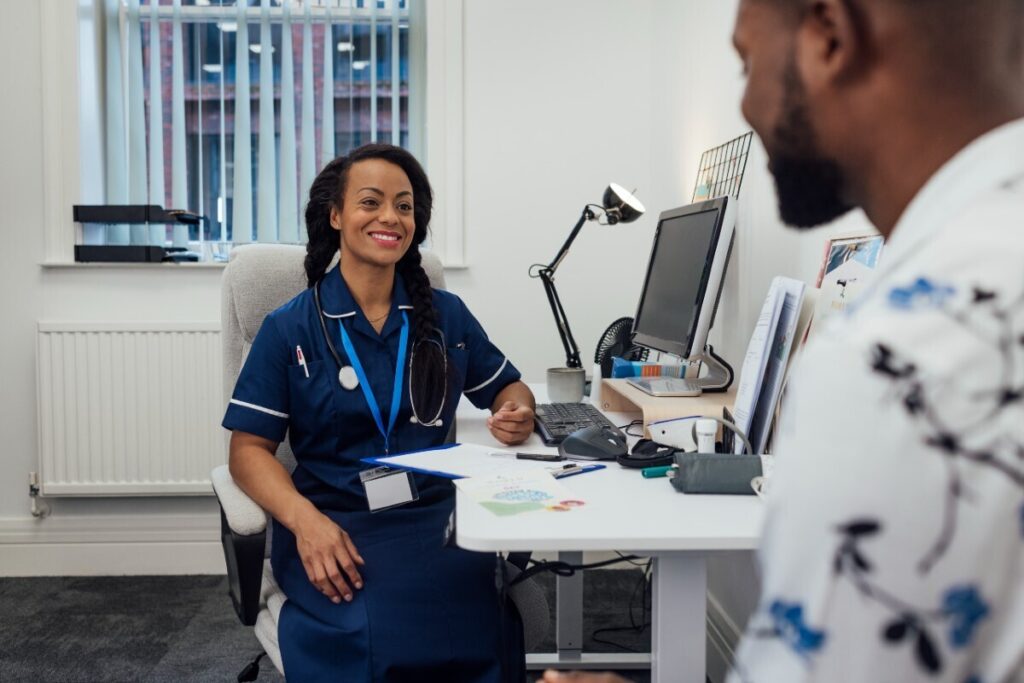
Jemma Sinclair came through Staffordshire's GPN Foundation School as a newly qualified nurse and, in September 2025, took up a new role as a PCN general practice nurse with Seisdon PCN. She explains how her role, funded under additional roles reimbursement scheme (ARRS), is enabling her to develop vital skills while also actively contributing to service design.
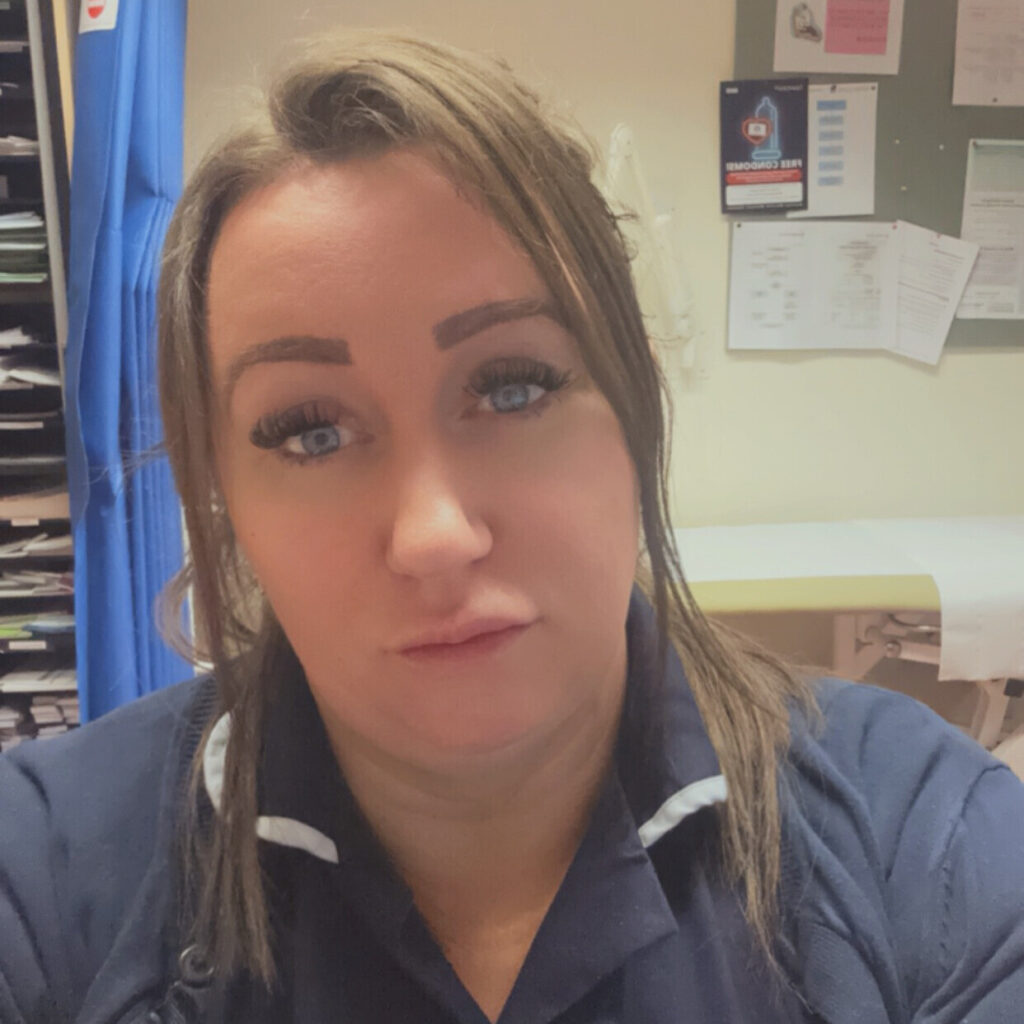
When I qualified as a nurse, I knew I wanted a role that was varied, rewarding and intellectually challenging. I wanted to help patients navigate their health journeys, work autonomously and develop confidence in my own clinical judgement. For me, general practice was the obvious fit.
Yet, stepping into primary care as a newly qualified nurse was, at times, overwhelming and frankly terrifying – particularly the first time I ran clinics independently, sitting alone in my room with just me and the patient. The responsibility felt immense. However, it was also the beginning of a journey that has shaped not only my confidence, but my professional identity.
I was fortunate to be recruited through the general practice nurse (GPN) Foundation School in Staffordshire. Alongside working in a practice and completing the Fundamentals of General Practice at university, I received structured learning and ongoing support from the Foundation School. Funded through the additional roles reimbursement scheme (ARRS), I was based in a single practice for my first year. This continuity gave me the space to find my feet, develop my skills safely and begin to understand the realities of primary care while navigating a steep learning curve.
At the end of that first year, my ARRS-funded role evolved. I became a GPN employed by the PCN, rather than by an individual practice. This transition marked the beginning of a role that is still very much in the making.
A role still being shaped
Starting any new role can be daunting. Starting one that is largely unestablished adds another layer of uncertainty. Yet this uncertainty also brings opportunity. I have found myself in a position where I can help shape not only my own role, but potentially a blueprint for future nurses entering similar posts.
Working closely with my PCN and host practices, I have begun to develop a role that reflects both patient need and my professional ambitions. This has allowed me to explore chronic disease management, health promotion and preventive care, while also aligning my development with practice priorities. Importantly, it has given me the opportunity to pursue my particular passion for women’s health.
For a newly qualified nurse, having the freedom to grow both a role and one’s own competence is incredibly empowering. It reinforces the idea that early career nurses are not simply filling gaps, but actively contributing to service design.
A solid foundation for innovation
The GPN Foundation School provided a vital launchpad into primary care. It prepared me for autonomous decision-making, long-term conditions management and the importance of continuity of care. It also introduced me early to quality improvement;something that has since become central to my professional identity.
Through my PCN role, I now have protected time each week dedicated to quality improvement projects. This feels particularly significant in an NHS under increasing pressure. Qualifying in 2024 meant entering a system facing unprecedented demand, but also one that is increasingly open to innovation – especially within general practice. This creates space for early career nurses to think critically, contribute ideas and help design solutions rather than simply follow long-established pathways.
Although I am still in the early stages of this role, my confidence grows week by week. During my first year I benefited from strong mentorship and was honoured to be awarded GPN Trainee of the Year through the Foundation School. More recently, I was selected as a Queen’s Institute of Community Nursing Rising Star, with the support of my PCN.
While recognition is not what drives me, these experiences have reinforced that early career nurses do have a voice in shaping the future of primary care. Enthusiasm, vision and a willingness to do things differently are valued – and needed.
Challenges and opportunities
Designing a role without a clear template is exciting, but it is not without challenges. ARRS funding brings an expectation of equity across practices within the PCN, yet delivering this in practice is complex. I currently run clinics across three GP surgeries, with plans to open these appointments to patients across all eight practices in the network.
One of the greatest challenges is that existing systems were not designed for the variability required in practice nursing. Appointment needs differ daily, and each clinic type demands different timeframes to ensure safe, effective care. The central booking systems lack this flexibility, meaning that progress has been one of trial and error. Additional challenges, such as stock management across practices, are also being addressed in collaboration with the PCN management team.
On a personal level, not having a single ‘home’ practice can feel isolating. There are times when I struggle to feel fully part of a wider team, unsure where to turn for support when things feel overwhelming. Being only a year post-qualification amplifies these feelings, and imposter syndrome inevitably creeps in. At times, the expectations placed upon me feel far beyond my experience.
Despite this, I remain committed to growing into the role and actively seeking the support I need to thrive.
Stepping into an ARRS-funded general practice nursing role has pushed me far beyond my comfort zone. It has also shaped me into a more confident, resilient and forward-thinking nurse. The challenges –whether systemic, logistical or personal – are real, but they also offer opportunities to influence how this role evolves for those who follow.
Primary care needs nurses who are willing to learn, adapt and innovate. I may be early in my career, but I am proud to be helping shape a role, a service and a future that I genuinely believe in.