The NHS landscape is about to change. Health secretary Wes Streeting recently said, 'However technocratic it might sometimes appear or even feel, good system architecture is how we bring to life the vision and ambition in the 10-year plan'. There is a concerted effort underway to reshape the system, and the question for PCNs is where will they fit in?
We still do not have the full picture, and in particular we are awaiting more information on the promised new contracts – the single neighbourhood provider (SNP), the multi-neighbourhood provider (MNP) and the integrated healthcare organisation (IHO) contracts. The detail in these will give us a much clearer picture of where the future of the PCN DES (and therefore of PCNs) will lie.
However, NHS England published documents that provide some further insights into the future last month. The Strategic Commissioning Framework outlines the future role of ICBs. It basically says that the new role of ICBs is less as conveners of the system and more as encouraging and enabling collaboration via contracts.
ICBs will maintain responsibility for general practice. But their main role it seems will be that of what it calls “market shaping”, which is essentially introducing the three new contract models. NHS England views individual GP practices, SNPs and MNPs as population-based entities, and it is seeking to shift the system to one based on these rather than on payment for activity.
PCNs however, despite also being population-based entities, do not get a mention. As a result, it is very hard to believe there is a future for PCNs outside of neighbourhoods. There could be a future as a mechanism for enabling the practices within a neighbourhood to function as a collective. But primacy is inevitably shifting to the neighbourhood from the PCN.
There is speculation that enhanced services (which one assumes will include the PCN DES) are to be included in the new neighbourhood contracts. In this scenario, PCNs will most likely have to evolve fully into neighbourhoods.
What this evolution will look like remains to be seen. It could be relatively straightforward, with the PCN being extended to take on a wider range of local partners as it embraces whole system working across the local area. The CD could become the neighbourhood lead, the PCN manager the neighbourhood manager, and the new requirements could simply have more of a whole system feel than those on PCNs.
But it may be less straightforward. Many practices already find it hard to work together as a PCN, and working with other local organisations and agencies is likely to be harder still because of the greater cultural differences. Where the PCN area does not match the new neighbourhood area, where multiple potential leaders vie for the neighbourhood lead role, and where poor historical relationships act as barrier to effective multi-agency working life could become very difficult very quickly.
At a place-based level the changes may be even more radical as a result of the IHO contract, which may be awarded to the new Advanced Foundation Trusts. In this scenario, the whole health budget for a local population will be held by the IHO, who will then take on responsibility for planning services and allocating resources. Here the local ICB role is reduced to simply managing the IHO contract.
The idea is that the IHO contract holders will be incentivised to reduce costs by shifting care towards neighbourhood health. The exact relationship between them and SNP and MNP contract holders at present remains unclear (more detail is expected in the promised guidance), but potentially the IHO will hold the resources and subcontract to the other two as it sees fit.
The prospect of directly receiving, or not receiving, funding from the local foundation trust is daunting. But it is a very real possibility that this will be how the changes work out.
The good news for PCNs is that there is no moving away from PCN-shaped areas. In many places the neighbourhood footprint is being aligned to the existing PCN footprint. There is clearly an expectation that general practice, and by extension PCNs, will be at the forefront of developing neighbourhoods and making them effective. Ultimately the success of the government’s strategy hinges on neighbourhoods being successful in taking on more activity and improving outcomes. So while the risks feel great, the opportunities are potentially greater, and the challenge now is navigating through these changes as they unfold.
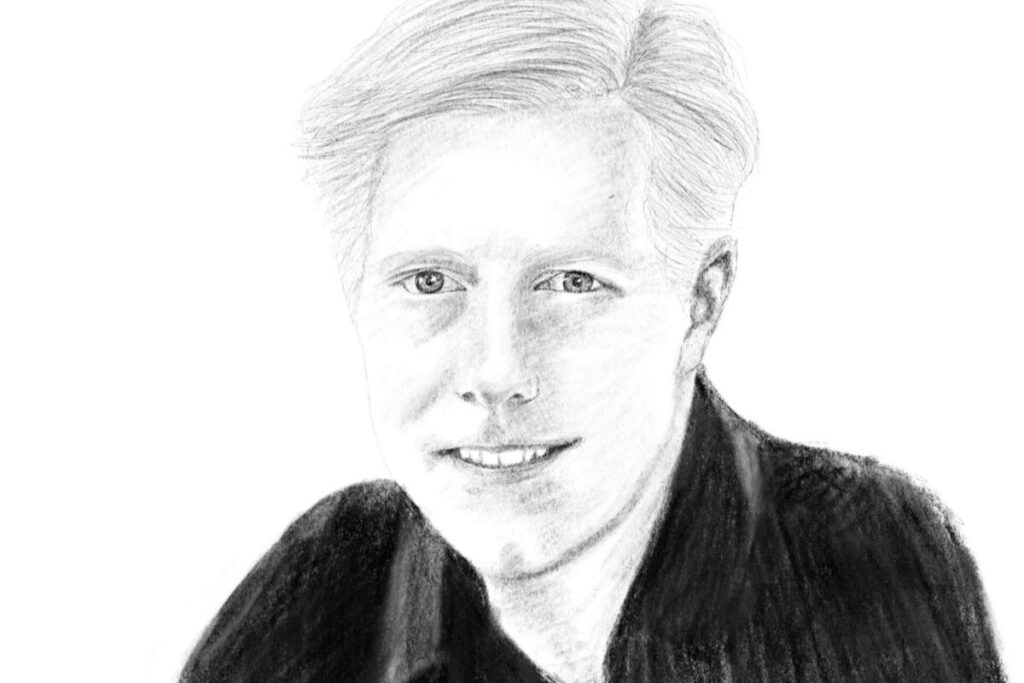
Ben Gowland is director and principal consultant at Ockham Healthcare, a think tank and consultancy. He was an NHS chief executive for eight years and has also been a director of Croydon Health Services NHS Trust. He established Nene Commissioning, first as a PBC organisation and then as one of the largest CCGs.