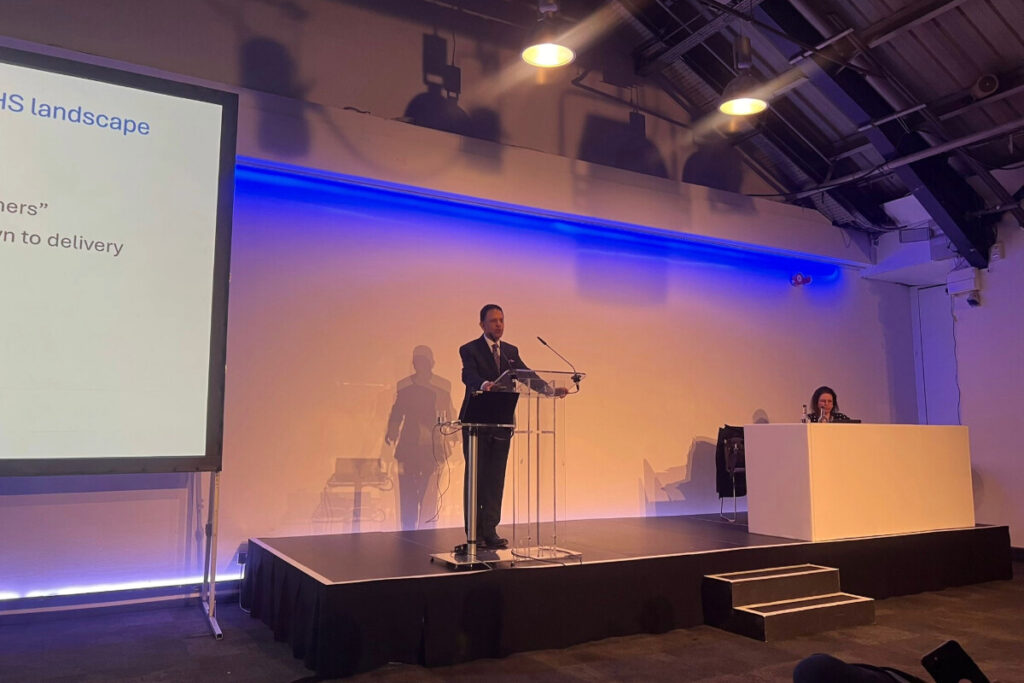
Primary care networks (PCN) and local medical committees (LMC) are allies in fighting for general practice to be at the ‘helm’ of the neighbourhood landscape, a prominent health figure has said.
GP partner and former British Medical Association chair Dr Chaand Nagpaul also told delegates that PCNs and general practice need to take up their ‘rightful place’ at the head of integrated neighbourhood teams (INT).
Closing the Pulse PCN and Pulse LIVE London 2026 conference on Wednesday, Dr Nagpaul said: ‘It's really important for LMCs and PCNs to collaborate because ultimately, you know, we are allies in fighting for general practice to be at the helm of the local neighbourhood landscape and develop synergistic relationships.’
Dr Nagpaul, who is also chair of the Harrow LMC, said there needed to be a strong voice for GPs and primary care in order to address a ‘power imbalance’ with the acute sector, which he said can have ‘huge control over strategy at a local level’.
He added: ‘So at this moment in time, what you desperately need is to create within our own areas, a very strong voice for general practice and primary care, and that representation needs to be very much at parity at a local level.
‘So if you've got acute care collaborators, you need to have primary care collaboratives that really stake their claim and really punch above their weights.’
Dr Chaand Nagpaul also said that general practice and PCNs should be 'at the helm' of the new INTs, which will bring together different professions and partners to work side by side to support people.
He added: ‘We need to argue correctly that general practice and PCNs should be at the helm of emerging integrated neighbourhood teams.’
‘And that's not to say anyone needs to be excluded, but do give general practice and PCNs their rightful place, and that is something that we all need to be doing now before these new arrangements get embedded in,’ he added.
The government’s recent neighbourhood health framework set out that integrated care boards (ICB) will be expected to develop INTs focused on preventing patient deterioration and avoiding unnecessary hospital use.
The shift also involves opening 250 neighbourhood health centres across the country through a mix of private and public finance, with the locations first 27 revealed last month.
Dr Nagpaul also said it vital for GPs and PCNs to ensure that government promises in the 10-Year Health Plan and recent neighbourhood framework to shift funding from the acute sector to community and primary care were met.
‘Now, if that is to happen, that would be bucking the trend of the past few decades, because what we've seen is the opposite, and yet you have these very explicit words that I've not seen quite so explicitly expressed in previous iterations of government reforms,’ he added.
‘This is the time where we need to stake our claim as a profession.
‘We need to stake our claim at a local level, at a national level, and really throw these words back at each meeting we attend, with every interaction we have with our ICB or whoever you're interacting with, to make sure that they do comply and adhere to what is a very clear, unequivocal expectation from the centre.’
Pulse PCN is coming next to Birmingham on Wednesday 10 June.
Pulse PCN events
Pulse PCN delivers a series of in-person events across the UK, bringing together PCN Clinical Directors, PCN Managers and senior PCN leaders.
As the 10-year plan accelerates the move towards neighbourhood health services, PCNs are uniquely placed to lead delivery. Our events explore what this next phase means in practice. Register today to save your free spot and connect with peers.