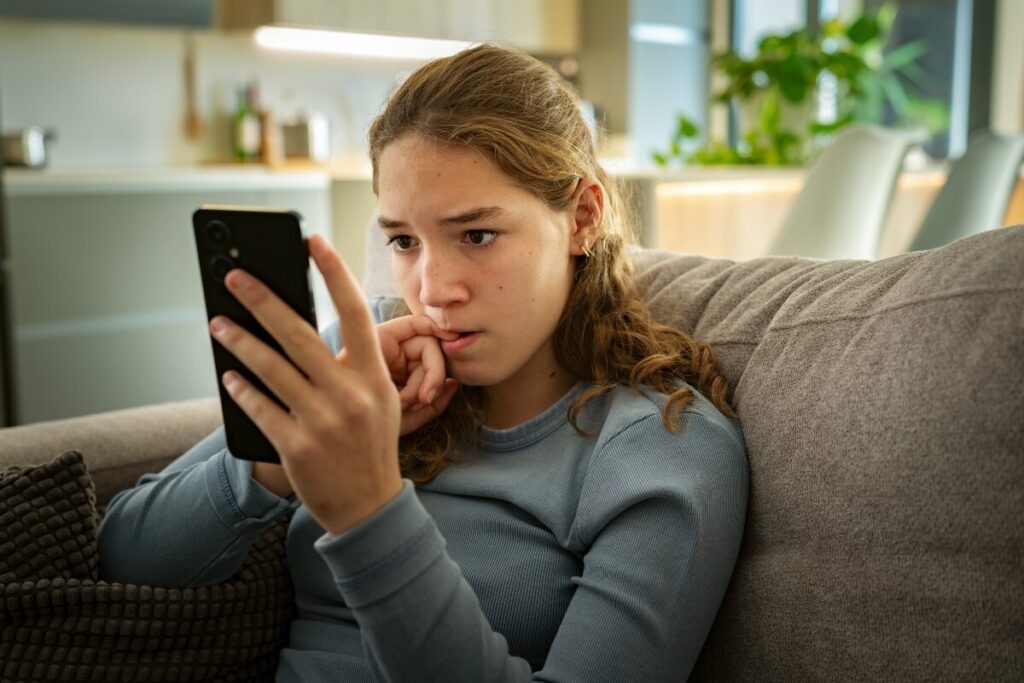
The impact of social media on children and young people should be seen as a ‘public health crisis’, the Royal College of General Practitioners (RCGP) has said.
It comes as the Government announced a consultation on children’s social media use, including banning phones in schools, on Monday 19 January.
In a statement to Parliament yesterday, Science, Innovation and Technology Secretary Liz Kendall said that the three-month consultation will include the option to ban social media for children under 16.
Responding to the announcement, the RCGP warned of the ‘serious impact’ of digital harms - including those linked with social media - on children and young people’s health and wellbeing.
It described an impact on mental health, sleep, neurodevelopment, behaviour, social relationships and family functioning.
RCGP chair Professor Victoria Tzortziou Brown said: ‘It is vital that the health impact of growing up in the digital environment is addressed at a population level by policymakers, regulators and technology companies, not left solely to families and clinicians.’
She said the review was ‘a welcome step forward in tackling a growing public health crisis’.
Speaking about the prospect of a ban, she added: ‘It is not for the College to say if an outright ban on social media will achieve these aims, but we have been clear that we must take a preventative, child-centred approach that prioritises system-level change as well as greater support for parents and guidance for GPs.’
The Government said the consultation will seek views on a range of measures, including:
- determining the right minimum age for children to access social media, including exploring a ban for children under a certain age
- exploring ways to improve the accuracy of age assurance for children to support the enforcement of minimum age limits so children have age-appropriate experiences and see age-appropriate content
- assessing whether the current digital age of consent is too low
- removing or limiting functionalities which drive addictive or compulsive use of social media, such as ‘infinite scrolling’
- exploring further interventions to support parents in helping their children navigate the digital landscape, for example, further guidance or simpler parental controls
The Faculty of Public Health said it supported calls to recognise risks posed by children’s mobile phone use and exposure to harmful online content as a serious public health emergency.
Education secretary Bridget Phillipson said: ‘We have been clear that mobile phones have no place in our schools but now we’re going further through tougher guidance and stronger enforcement.’
The consultation follows the Online Safety Act, which became law in October 2023 and requires Ofcom to develop guidance and codes of practice on how online platforms meet their duties.
This includes protecting children from harmful content. Ofsted will also check school mobile phone policies as part of its inspections.
A study published earlier this month found that two-year-olds in England are spending an average of two hours a day on screens.
The research, commissioned by the Department for Education and led by researchers from University College London, linked higher screen use to linked to poorer language development and increased emotional and behavioural difficulties.