
From falls prevention to diabetic foot screening, first contact podiatrists (FCP) help to improve patients’ quality of life, while reducing unnecessary hospital admissions. Emma Mitchell, who is employed as an FCP in Essex under the additional roles reimbursement scheme (ARRS), explains how her role fits into general practice.
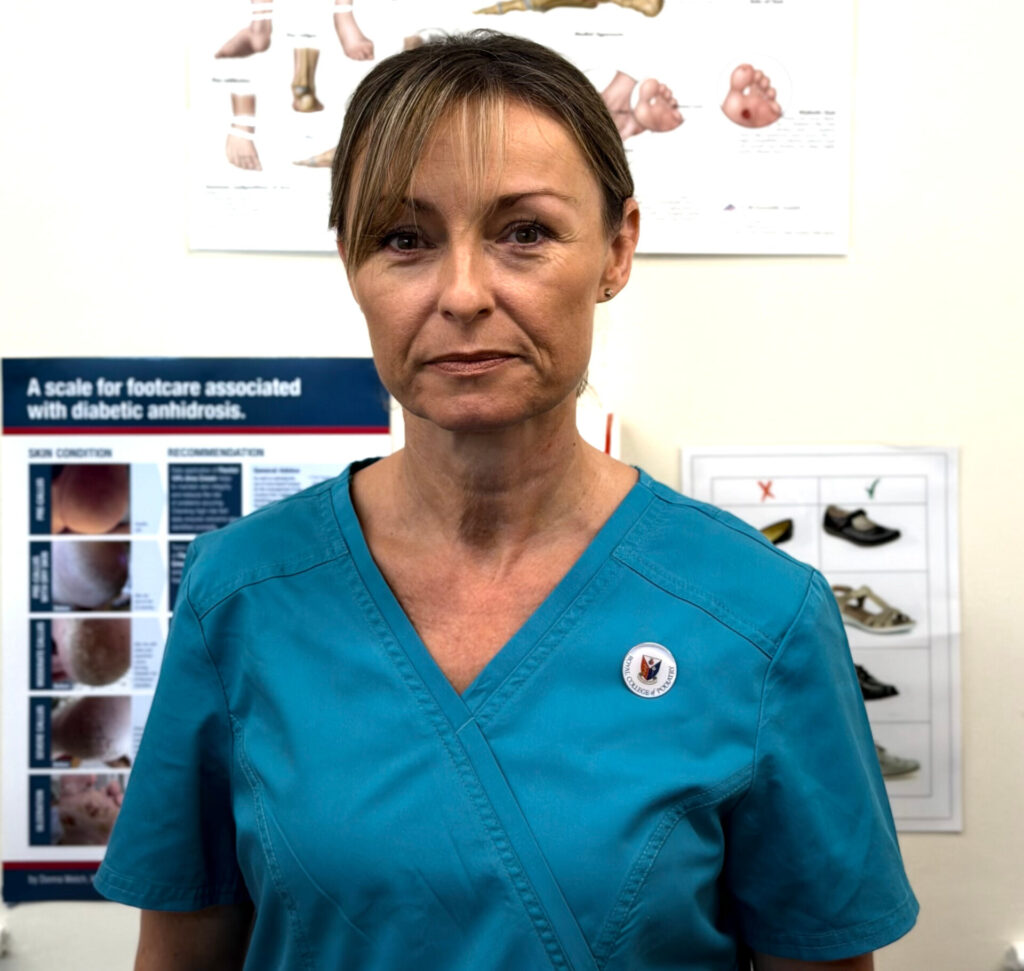
I’ve been in post as an FCP podiatrist for Southend Victoria PCN, Essex, for three and a half years. During this time, my role has developed – as have my skills and understanding of the FCP model.
My patients receive specialist assessment, diagnosis and treatment of foot and lower limb conditions at the first point of contact, as well as education and appropriate signposting. I request relevant far tests including radiology, ultrasound, bloods and pathology in addition to ensuring appropriate onward referral to the secondary care sector as required.
The value podiatrists bring
Secondary care NHS podiatry services provide a primarily high-risk service only, helping to prevent amputation and working alongside vascular, endocrinology diabetes services, and orthopaedics within the hospital setting. This means that a huge portion of the population do not meet the criteria but are living with daily foot pain that is reducing their quality of life and limiting their activity level.
Podiatrists can improve the lives of people living with long-term conditions, including those with peripheral vascular disease, rheumatology and diabetes. Early diagnosis and timely management of foot ulcers prevents hospital admissions and supports NHS England’s ‘Getting It Right the First Time’ (GIRFT) programme.
We also help keep people on their feet with falls prevention through footwear advice, strengthening exercises and working with multidisciplinary services; this reduces the costs to the health and social care services.
A wide scope of practice
The FCP role enables me to utilise my whole scope of practice from orthosis and biomechanics, musculoskeletal foot conditions, dermatology with nail surgery and health promotion.
I love having such a large team of specialists to whom I can navigate patients, including frailty services, social prescribers, physiotherapists, dieticians, weight management, smoking cessation, pharmacists, diabetes specialists, mental health services and, of course, GP’s.
I’m involved in weekly tutorial sessions with the other allied healthcare professionals (AHP) which give us the opportunity to learn from and support each other. The surgery I’m based at is a teaching practice, so I regularly have students shadowing me and provide one-to-one teaching for diabetic foot screening.
I recently set up an ankle brachial pressure Index service within my PCN which is supporting diagnosis, prescribing and referral of patients with peripheral arterial and venous disease.
Making every contact count
Having a podiatrist as part of the primary care team is a fantastic addition which benefits both patients and healthcare professionals we work alongside. However, it’s not without its challenges.
When I first started, it took time to get the much-needed protected and appropriate one-to-one supervision – which I know is an issue for many FCPs coming into primary care. Building links with the services around me to ensure a smooth patient journey was also challenging to begin with.
I’m finding that, as my knowledge and capabilities increase into more advanced practice, I’m challenged to make every patient contact count. Increasingly, there are complex patients who need so much more than just a doppler vascular assessment, or advice about their plantar fasciitis or tendinopathy.
As a primary care clinician, I’m acutely aware that we provide a cradle-to-grave service which is open to all and I try to view every patient contact as an opportunity to do everything I can for them. I try to influence patient lifestyle choices and empower them through education and support.
I feel that it is important for FCPs to be the point of contact for patients between primary and secondary care, and in the interest of optimal collaborative working, where and when necessary, I try to communicate with other professionals.
However, I’m the only podiatrist working within my PCN which covers nine GP surgeries (65,000 people) and I am contracted for 25.5 hours per week. This can be very demanding as there is a huge podiatric need.
Ultimately, the AHP FCP model provides a hugely rewarding opportunity for podiatrists to utilise their full scope of practice, it also frees up access for GPs and gets patients seeing the right person at the right time. I believe we provide a valuable service which can and should be available within all PCN’s.